Writing Instruction in the Science of Writing Era: An SRSD Journey
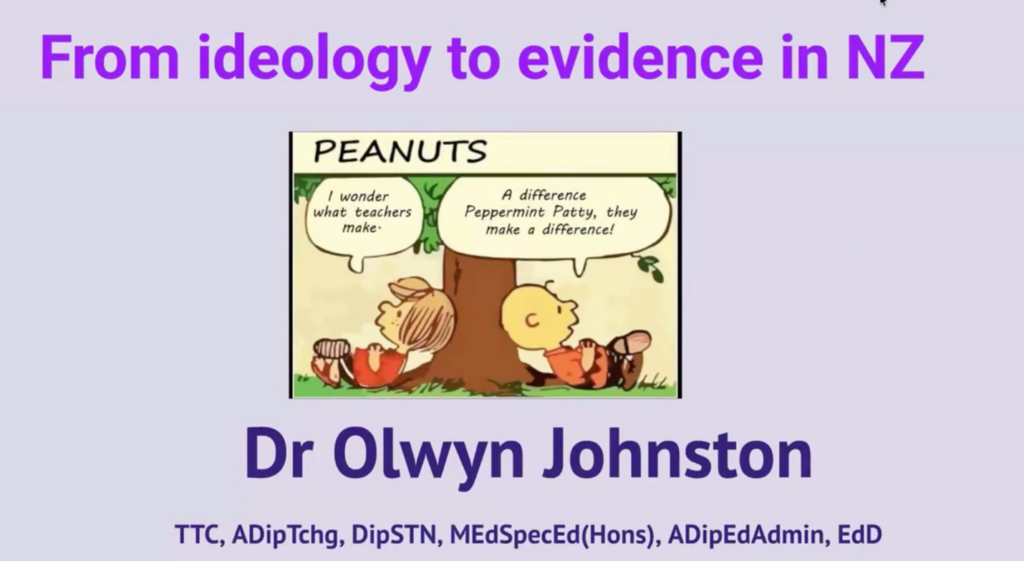
From Ideology to Evidence: Lessons from a New Zealand Literacy Leader
If you work in writing instruction long enough, you start to recognize a familiar pattern.
Teachers care deeply.
Students try hard.
Writing time happens regularly.
And yet progress feels uneven, fragile, and inconsistent.
That is why Olwyn Johnston’s journey from long-held ideology to evidence-aligned writing instruction matters so much. Not because it is dramatic or trendy, but because it is honest. Her story mirrors what many educators across New Zealand, Australia, Canada, and the U.S. have experienced: a slow, thoughtful reckoning with what felt right versus what actually works.
In her recent ZoomSide Chat webinar, Olwyn provides a case study on anchoring writing instruction in the Science of Writing. And it is worth your time. It’s a 20-minute presentation that offers a realistic roadmap for moving past “shiny” new practices towards meaningful systemic change. You can watch the 20-minute presentation here.
Moving Beyond “Belief Based” Instruction
“There was all of this ideology that was driving us. It wasn’t evidence-based.”
Olwyn begins where many literacy leaders must begin: with context.
For decades, New Zealand embraced a proudly constructivist approach to literacy and curriculum: Whole language reading, heavy student choice, and discovery-based learning. The intent was noble. They were grounded in a sincere belief that children would naturally learn to read and write if placed in rich environments.
But belief is not evidence.
As Olwyn explains, practices like using levelled readers, guessing strategies, open-ended writing workshops, and “hamburger paragraphs” became embedded without empirical grounding. Teachers were expected to confer endlessly, hoping feedback and quality would emerge through exposure and encouragement alone.
What stands out in her reflection is not criticism, it’s clarity. She names the problem precisely:
- Writing instruction lacked a systematic structure
- Expectations varied widely between classrooms
- Teachers were encouraged to “magpie” strategies without coherence
- When students struggled, it was interpreted as motivation or effort issues rather than instructional gaps
This is not unique to New Zealand. Many systems build writing instruction on ideology rather than on how the brain actually learns to write.
“We magpied shiny things, but there was no systematic, sequential, explicit way to teach writing.”
The Missing Piece in the Science of Reading Conversation
“It’s not just the ladder of reading. It’s the ladder of reading and writing.”
As structured literacy gained traction, professional development understandably focused on reading, yet education systems often overlooked the importance of integrating writing instruction effectively. Decoding. Phonics. Orthographic mapping. These shifts were necessary for improving reading comprehension.
But writing lagged behind.
Olwyn makes an important observation that aligns with current research: reading and writing are not separable skills. They are reciprocal, cognitively linked processes. The International Dyslexia Association (IDA) model has always made this clear, yet writing often remained the “neglected sibling” of literacy.
Effective writing is not just harder; it requires a multitude of skills and is the most cognitively demanding task we ask students to do. It requires idea generation, language formulation, transcription, organization, and self-regulation all at once.
If we do not teach the writing process explicitly, we overload working memory and misinterpret failure as inability.
That is where SRSD comes in.
Building the Foundation: Teacher Knowledge First
“Teacher knowledge matters hugely. We were never taught this ourselves.”
One of the most powerful aspects of Olwyn’s journey is that she did not jump straight to SRSD.
She and her team built teacher knowledge first.
They explored:
- Oral language development
- Sentence combining
- Colorful Semantics
- Syntax and sentence expansion
- Explicit grammar instruction
This matters.
SRSD is not a shortcut around teacher knowledge. It depends on it. The research is clear: when teachers understand sentence structure, clauses, conjunctions, pedagogy, and language function, students benefit.
What Olwyn explicitly and bravely names is that many teachers were never taught these concepts themselves. Without that knowledge, writing instruction becomes guesswork.
This layered preparation reflects what we know from SRSD research: strategy instruction works best when teachers understand the components they are modeling.
Why SRSD Was Different
“Having students write a lot is not teaching writing. Finally, someone taught me how to teach writing.”
When Olwyn encountered SRSD, she did not adopt it because it was new. She adopted it because it explained why previous approaches fell short.
Her description of SRSD aligns almost perfectly with the research literature:
- Explicit strategy instruction
- Deliberate skill practice
- Gradual release of responsibility
- Self-regulation as a core feature, not an add-on
- Modeling that externalizes thinking
- Routines that reduce cognitive load
This is not “skill and drill.” It is strategic instruction.
One of the most important shifts Olwyn describes is the reframing of self-talk as part of the broader concept of retrieval practice. In SRSD, self-talk is not motivational fluff—it is a mechanism for self-regulation and neuroplasticity. Students learn to manage things like avoidance, frustration, and task initiation explicitly.
That is evidence-based.
Hyping the Genre: Motivation Through Structure
“Teachers don’t fear change. They fear not being supported when asked to change.”
A standout moment in the webinar is Olwyn’s discussion of “hyping the genre.”
This is a perfect example of how SRSD balances structure and engagement.
Students are not told to “just write.” They are invited into a genre with purpose, audience, and energy. Whether it’s an “alien” audience, Santa’s elves, or persuasive speeches, the motivation is intentional and tied to the writing strategy.
SRSD research consistently shows that motivation increases when students feel competent. Structure does not kill creativity, it enables it.
Olwyn’s examples show this clearly. Once students know how to organize ideas, creativity flourishes.
Modeling Matters More Than Materials
“Self-regulation is the key.”
Another critical insight from Olwyn’s journey: teacher modeling is the intervention.
Not worksheets.
Not printables.
Not programs.
SRSD demands that teachers model:
- Planning
- Self-talk
- Strategy use
- Revision decisions
- Emotional regulation during writing
This aligns directly with decades of SRSD research showing that modeling, especially think-aloud modeling, is essential for transfer.
Olwyn’s emphasis on modeling self-talk across process, content, and affective domains reflects the heart of SRSD.
Students are not just learning to write; they are learning writing techniques that teach them how writers think about composition.
They are learning how writers think.
Differentiation Without Chaos
“It’s safe. It’s consistent. And it’s fun.”
One of the most compelling parts of Olwyn’s presentation is how SRSD supported students with diverse needs, including non-verbal autistic students and students with significant writing disabilities.
Instead of lowering expectations or creating separate “lower ability” groups, SRSD uses flexible entry points:
- Cut-up sentences
- Partially completed organizers
- Reduced strategy components
- Scaffolded explanations
- Disappearing supports as students gain confidence and skills
This is differentiation with guardrails.
Research consistently shows that SRSD is effective across learner profiles because it teaches strategies explicitly and adapts the level of support, not the integrity of the instruction.
Evidence of Impact That Actually Matters
“Think about it as a percentage increase.”
Olwyn does not oversell outcomes. She shares what educators care about:
- Increased student confidence
- Improved organization
- Stronger oral and written language
- Teachers who feel capable and calm
- Students who want to write
She also shares data responsibly. A student moving from zero words to six words in a timed writing task may sound modest until you understand growth trajectories and percentage change.
This is exactly how SRSD researchers interpret impact: meaningful growth at the student’s level.
Closing the “Matthew Effect” in Writing
“Matthew effects exist in writing, too. SRSD closes that gap.”
In education, the “Matthew Effect” describes how early advantages (or disadvantages) compound over time. One of Olwyn’s strongest statements is also one of the most research-aligned: these effects also exist in writing.
In writing, students who struggle early on tend to fall further behind when instruction relies on exposure rather than explicit teaching. SRSD interrupts that pattern.
Meta-analyses consistently show that SRSD produces large effect sizes for students with and without disabilities. It does not just raise the ceiling; it raises the floor.
Olwyn’s classroom examples make that research visible.
Why Olwyn’s Journey Matters
“The perfect teacher, the perfect curriculum, and the perfect lesson don’t exist. We are all works in progress.”
What makes this webinar powerful is not just SRSD.
It is Olwyn’s willingness to say: I believed something. I learned more. I changed.
That is professional courage.
Her journey models what effective instructional leadership looks like in the Science of Writing era: reflective, evidence-seeking, and student-centered.
If you are watching this webinar, you are not just learning about SRSD. When we move from ideology to evidence in writing instruction, we stop guessing and start teaching. And that is how real change happens.

About the Author
Randy Barth is CEO of SRSD Online, which innovates evidence-based writing instruction grounded in the Science of Writing for educators. Randy is dedicated to preserving the legacies of SRSD creator Karen Harris and renowned writing researcher Steve Graham to make SRSD a standard practice in today’s classrooms. For more information on SRSD, schedule a risk-free consultation with Randy using this link: Schedule a time to talk SRSD.


